
What if one of the most powerful tools for recovery wasn’t another supplement, peptide, medication or complicated biohack?
What if it was something your body already needs every second of every day?
Oxygen.
At Core iV Therapy®, Hyperbaric Oxygen Therapy is one of our favorite modalities—and one of the therapies we recommend most often as either a stand-alone wellness practice or as the final step in a larger biohacking protocol.
Why?
Because almost everything your body is trying to accomplish—from producing cellular energy to repairing damaged tissue—depends in some way on oxygen.
Hyperbaric therapy changes the environment in which oxygen is delivered.
And that is where things get interesting.
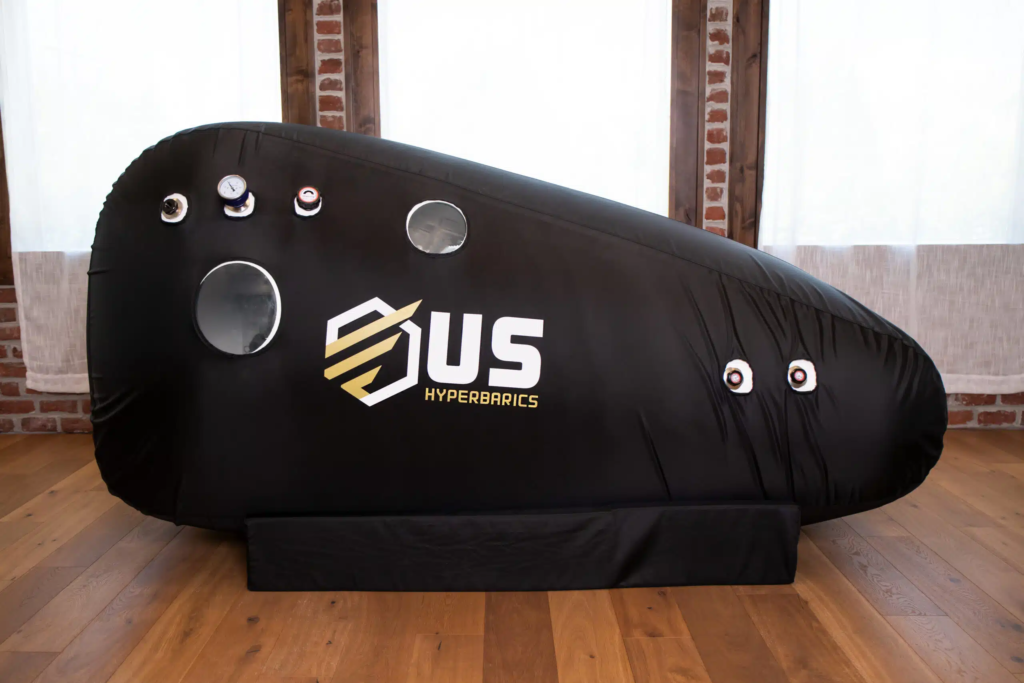
What Is Hyperbaric Oxygen Therapy?
Hyperbaric therapy involves entering a chamber in which atmospheric pressure is increased above normal sea-level pressure.
When increased pressure is combined with increased inspired oxygen, the amount of oxygen available to the body rises.
Normally, most oxygen in the blood is carried by hemoglobin. Under hyperbaric conditions, the partial pressure of oxygen increases and more oxygen can dissolve directly into plasma.
That increased oxygen availability is one reason hyperbaric oxygen has been studied for its effects on:
- Tissue oxygenation
- Wound healing
- Inflammation
- Neurological recovery
- Angiogenesis, or development of new blood vessels
- Mitochondrial function
- Stem/progenitor-cell signaling
- Recovery from injury
This isn’t new technology.
In fact, hyperbaric medicine has one of the most fascinating histories of almost anything we use.
Hyperbaric Therapy Is More Than 350 Years Old
The concept dates back to the 1600s—before oxygen itself had even been discovered.
In 1662, British physician Nathaniel Henshaw described a pressurized chamber called the Domicilium, an early concept for treating people by changing atmospheric pressure.
The science evolved dramatically over the centuries.
By the late 1800s, researchers were studying how pressure and oxygen affected human physiology.
Hyperbaric medicine then became closely connected to diving medicine.
In 1937, Behnke and Shaw successfully used hyperbaric oxygen for decompression sickness.
From there, researchers began exploring its use in surgery, wound care, infections, radiation injuries, burns and other conditions.
Today, hyperbaric oxygen is an established medical treatment for a specific group of serious conditions while simultaneously being investigated for a much broader range of neurological, recovery, performance and healthy-aging applications.
Hospital HBOT and Mild Hyperbaric Therapy Are Not the Same Thing
This distinction matters.
Traditional medical HBOT is commonly delivered in hard-sided chambers at pressures of approximately 2.0–3.0 ATA, depending upon the medical indication and protocol.
Hospital-level hyperbaric medicine is used for serious conditions such as:
- Decompression sickness
- Carbon monoxide poisoning
- Air or gas embolism
- Gas gangrene
- Crush injuries and acute traumatic ischemia
- Certain difficult-to-heal wounds
- Severe anemia in selected circumstances
- Intracranial abscess
- Necrotizing soft-tissue infections
- Refractory osteomyelitis
- Radiation tissue injury
- Compromised grafts and flaps
- Acute thermal burns
- Sudden sensorineural hearing loss
- Avascular necrosis
These are medical conditions requiring appropriately trained medical teams and clinical protocols.
We aren’t trying to replace that.
At Core iV Therapy®, our focus is different.
Why We Chose 1.3 ATA Mild Hyperbaric Therapy
Our chamber operates at approximately 1.3 ATA.
We chose mild hyperbaric therapy because it fits beautifully into what we do every day:
recovery, wellness, longevity and repeatable biohacking.
It is:
- Comfortable
- Accessible
- Generally easier to tolerate
- Practical for repeated sessions
- Well suited to longer-term wellness protocols
For biohacking, the question isn’t always:
“How high can we turn the pressure?”
A better question can be:
“What protocol can someone realistically and consistently incorporate into their life?”
That distinction matters because hyperbaric research repeatedly demonstrates something important:
HBOT is often a cumulative therapy.
Many of the interesting studies aren’t based on one session.
They’re based on 20, 40 or even 60 sessions.
Consistency matters.
They are different oxygen-pressure exposures, and higher-pressure medical protocols remain necessary for specific hospital indications.
Research has demonstrated measurable physiological changes with mild hyperbaric exposures, including studies around approximately 1.27–1.3 ATA.
Research involving traumatic brain injury has also produced intriguing—but mixed—results at lower pressures. A 2022 systematic review found improvements in several studies of persistent post-concussion symptoms, although protocols varied considerably and the overall field remains debated.
That is exactly why we don’t sell 1.3 ATA as a replacement for hospital HBOT.
We use it for what it does particularly well:
providing a comfortable, repeatable hyperbaric environment that can be incorporated consistently into a wellness and recovery program.
The Part People Miss: PRESSURE Isn’t the Whole Story
There are two variables people frequently confuse:
Pressure
and
Oxygen concentration.
Increasing pressure changes gas behavior and increases oxygen partial pressure.
But what you are actually breathing matters too.
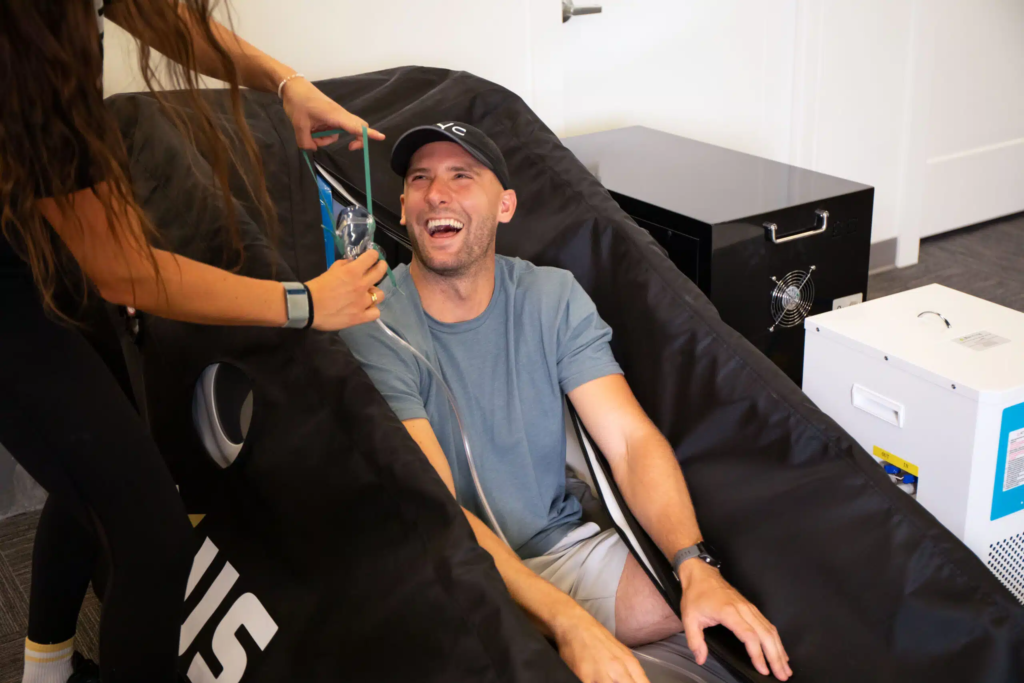
This is why our protocol incorporates supplemental oxygen delivery by mask.
Why We Use an Oxygen Mask
The chamber creates the increased-pressure environment.
The oxygen mask increases the concentration of oxygen you’re actually breathing.
Those two things work together.
This matters especially in a mild chamber.
If someone is simply sitting inside a pressurized chamber breathing ordinary room air, they are receiving a different oxygen exposure than someone at the same pressure breathing supplemental oxygen.
That doesn’t automatically mean one protocol is appropriate for every person or condition.
It does mean consumers should ask a very important question:
“What am I actually breathing inside the chamber?”
Not all hyperbaric experiences are created equally.
Different chambers and facilities use different oxygen-delivery systems and protocols.
At Core iV Therapy®, we believe dedicated oxygen delivery is an important component of maximizing the oxygen exposure of our mild-hyperbaric sessions, which is why our protocol includes an oxygen mask when appropriate and consistent with equipment instructions.
How Long Should You Stay in a Hyperbaric Chamber?
Our philosophy is that hyperbaric therapy should be treated as a protocol, not a novelty.
For many wellness clients, we generally prefer meaningful sessions rather than very short exposures.
A typical Core iV protocol may involve approximately:
60 minutes at therapeutic pressure, depending on the individual and the protocol.
Some clients may benefit from repeated sessions throughout the week.
In certain customized protocols, multiple sessions may be considered, but frequency should be individualized rather than assuming “more is always better.”
Your goals matter.
Your medical history matters.
And what you’re stacking HBOT with matters.
What Can Hyperbaric Oxygen Therapy Help With?
This requires an important distinction.
Some applications of HBOT are established medical indications.
Others are areas of active research and should be described as investigational or supportive, rather than proven treatments.
Established medical applications include:
- Decompression sickness
- Carbon monoxide poisoning
- Gas embolism
- Selected difficult wounds
- Radiation tissue damage
- Compromised grafts and flaps
- Acute thermal burns
- Certain serious infections
- Refractory osteomyelitis
- Crush injury/acute traumatic ischemia
- Sudden sensorineural hearing loss
- Avascular necrosis
Areas being researched or used in supportive wellness/performance settings include:
- Traumatic brain injury
- Persistent post-concussion symptoms
- Cognitive recovery
- Brain fog
- Chronic neurological deficits after stroke
- Fibromyalgia
- Chronic fatigue symptoms
- Post-COVID symptoms
- Exercise recovery
- Muscle injury recovery
- Athletic recovery
- Inflammation
- Healthy aging
- Cellular senescence
- Mitochondrial health
- Tissue repair
- Post-surgical recovery
- Neuroplasticity
- Cognitive performance
- Sleep and recovery
- General wellness and resilience
That’s important.
Biohacking should be innovative.
It should also be intellectually honest.
HBOT and the Brain: TBI & Concussion
This may be one of the most interesting areas of hyperbaric research.
After traumatic brain injury, some tissue may remain alive but function poorly because of changes involving inflammation, metabolism, blood flow and oxygen utilization.
Researchers have therefore investigated whether repeated hyperbaric oxygen exposure can influence neuroplasticity and persistent post-concussion symptoms.
A 2022 systematic review evaluated 11 studies involving persistent post-concussion syndrome. Several trials using repeated HBOT reported improvements in symptoms or cognition, although results varied by pressure and oxygen dose and controversy remains regarding sham exposures.
In other words:
There is enough evidence to make this area scientifically interesting—but not enough to pretend the debate is over.
For athletes with a history of concussion, that distinction is particularly important.
HBOT and Stroke Recovery
Another fascinating area is neuroplasticity.
A randomized controlled study of chronic stroke patients evaluated 40 HBOT sessions in people whose strokes had occurred 6–36 months earlier.
Researchers reported improvements in neurological function and quality of life following treatment, accompanied by changes on brain imaging.
What it demonstrates is something much bigger:
Oxygen and pressure can influence biological processes involved in neurological recovery—even long after an injury.
HBOT and Stem/Progenitor Cells
This is one of the reasons regenerative-medicine practitioners became so interested in hyperbarics.
In a human study published in the American Journal of Physiology, researchers found that a single 2.0 ATA hyperbaric oxygen exposure approximately doubled circulating CD34+ cells.
After 20 treatments, circulating CD34+ cells increased substantially.
It provides fascinating evidence that hyperbaric oxygen can affect pathways involved in the body’s own repair systems.
And that brings us to something very important about how we use HBOT at Core iV.
Why We Love Hyperbaric Therapy LAST
If you’ve followed our Biohacking Series, you’ve probably noticed something:
We rarely think about therapies in isolation.
We think about how they work together.
That is the foundation of strategic stacking.
And when we’re building a stack, hyperbaric therapy is very often the final step.
Why?
Because many of the therapies we use earlier in a protocol are designed to provide nutrients, influence signaling, support circulation, alter cellular metabolism or support repair.
Then we finish with an environment designed to increase oxygen availability.
Our philosophy is:
PREP → DELIVER → SIGNAL → OXYGENATE
What Do We Like Before HBOT?
Depending upon the individual, hyperbaric therapy may follow:
- IV nutrients
- NAD+
- Niagen NR
- Glutathione
- Ozone therapy
- Peptide protocols
- Exosome/regenerative protocols
- Exercise or athletic recovery
- Other recovery modalities
Hyperbaric oxygen increases oxygen availability to tissues and can influence processes associated with perfusion, angiogenesis, inflammatory signaling, mitochondrial metabolism and tissue repair.
So instead of thinking:
“HBOT pushes the treatment deeper.”
Think:
“We deliver the intervention first—and then place the body into an oxygen-rich environment intended to support the biological work that follows.”
That is why we love finishing with it.
Why We Love Ozone + Hyperbaric Together
These are sometimes incorrectly treated as competing oxygen therapies.
We don’t see them that way.
They work very differently.
Ozone therapy involves controlled exposure to an oxygen-ozone mixture and is being investigated for effects involving redox signaling, inflammatory pathways and circulation.
Hyperbaric therapy uses increased atmospheric pressure and oxygen exposure to increase oxygen availability.
When appropriate, we generally prefer:
OZONE → HBOT
We use the ozone portion first and the hyperbaric session afterward as the oxygenation/recovery portion of the stack.
The specific combination has not been proven superior in large clinical trials, so we don’t present it as an established medical treatment.
It’s part of our integrative protocol philosophy.
Hyperbaric Oxygen and Athletic Recovery
Professional athletes have used hyperbaric chambers for years, but the scientific picture is more nuanced than the headlines suggest.
A 2026 systematic review and meta-analysis found that HBOT reduced post-recovery blood lactate in the studies analyzed, while an earlier 2021 meta-analysis did not find significant overall improvements in performance or post-exercise recovery.
A 2025 meta-analysis reported improvement in recovery from exercise-induced muscle injury, although not necessarily muscle soreness.
So should every athlete expect HBOT to make them faster tomorrow?
No.
That’s not how we position it.
We are much more interested in HBOT as part of a recovery environment:
- Supporting recovery between training sessions
- Tissue oxygenation
- Injury-recovery protocols
- Concussion research
- Repeated exposure over time
- Maintaining a high-performance body
For serious athletes, recovery isn’t what happens when training stops.
Recovery is part of training.
What About Anti-Aging?
This is probably the section biohackers will find most interesting.
A prospective human study of adults aged 64 and older examined 60 repeated HBOT sessions.
Researchers reported increases in telomere length in several immune-cell populations and reductions in some senescent cell populations.
That’s remarkable research.
But there’s an important caveat:
The study used a specific higher-pressure HBOT protocol.
So we don’t tell clients:
“Our chamber lengthens your telomeres.”
We say:
Hyperbaric oxygen is being actively investigated as a longevity intervention because repeated oxygen-pressure exposures appear capable of influencing biological pathways associated with aging.
That’s both more accurate and more exciting.
HBOT and Long COVID
This is another area where responsible interpretation matters.
One randomized sham-controlled trial involving 40 HBOT sessions reported improvements in cognition, energy, sleep, psychiatric symptoms and pain interference in patients with post-COVID symptoms.
However, another randomized trial using only 10 HBOT sessions did not find a significant advantage over sham treatment.
Why is that interesting?
Because once again it raises the possibility that:
Protocol and cumulative exposure matter.
But more research is needed before HBOT can be considered an established treatment for Long COVID.
HBOT and Fibromyalgia
Research has also explored HBOT for fibromyalgia.
A 2023 meta-analysis of four randomized controlled trials involving 163 participants found improvements in fibromyalgia-impact measures and tender-point counts, although pain improvement itself was not statistically significant and side effects were more frequent with HBOT.
Again:
Promising.
Interesting.
Not magic.
So Is More Pressure Always Better?
No.
And this is where biohacking sometimes gets unnecessarily competitive.
More isn’t automatically better.
The appropriate pressure depends upon what you’re trying to accomplish.
If someone has carbon monoxide poisoning, decompression sickness, a severe burn or another recognized emergency indication:
They belong in an appropriate medical hyperbaric facility.
That’s not what our 1.3 ATA chamber is designed to replace.
But if someone is incorporating mild hyperbarics into an ongoing program involving wellness, recovery, longevity or performance?
Then comfort, oxygen delivery, frequency, duration and consistency become extremely important.
That’s where we believe our 1.3 ATA system shines.
Why We Believe Consistency Matters More Than Chasing Pressure
Look through the hyperbaric literature and you’ll notice something quickly.
Many compelling protocols involve:
20 sessions.
40 sessions.
Sometimes 60 sessions.
Hyperbaric therapy frequently isn’t a “one and done” intervention.
It’s cumulative.
That makes a comfortable, accessible chamber especially attractive for wellness and biohacking.
We would rather see someone follow a well-designed, repeatable protocol than chase an extreme intervention they rarely use.
What Does a Core iV Hyperbaric Session Look Like?
Our mild hyperbaric chamber operates at approximately 1.3 ATA.
Our approach emphasizes:
- Dedicated supplemental oxygen delivery
- An oxygen mask when appropriate
- Meaningful session duration
- Comfortable repeated use
- Individualized frequency
- Integration with other therapies when appropriate
Some clients use hyperbaric therapy as a stand-alone recovery session.
Others use it as the final component of a larger Core iV stack.
And yes—
If we’re stacking therapies, we usually want the hyperbaric chamber LAST.
Who Should Not Use Hyperbaric Therapy?
HBOT isn’t appropriate for everyone.
An untreated pneumothorax is a major contraindication.
Additional conditions, medications, ear/sinus problems, lung disease, pregnancy considerations and other factors may require medical evaluation before treatment.
Pressure changes can also cause:
- Ear or sinus barotrauma
- Temporary vision changes
- Claustrophobia
- Oxygen-related adverse effects at sufficient doses
And because oxygen-rich environments increase fire risk, hyperbaric safety rules matter.
The FDA has specifically emphasized proper equipment operation, trained staff, monitoring, maintenance, fire prevention and adherence to manufacturer instructions.
This is medical equipment—not a sleeping pod.
We treat it accordingly.
The Core iV Philosophy: Don’t Just Add Therapies. Stack Them Intelligently.
This entire Biohacking Series has been building toward something.
First we talked about NAD.
Then peptides.
Then ozone.
Then Niagen NR.
Now hyperbaric oxygen.
Each therapy is interesting individually.
But true optimization isn’t about collecting treatments.
It’s about understanding:
What does this person need?
What are we trying to accomplish?
Which interventions complement each other?
In what order should we use them?
And:
What can this person realistically sustain?
That’s the difference between trying biohacks and building a biohacking strategy.
Example Core iV Stack
A customized performance or longevity day might look something like:
1. PREP
Ozone therapy or another appropriate foundational modality
↓
2. DELIVER
Targeted IV nutrients, NAD or Niagen NR
↓
3. SIGNAL
Appropriate peptide or regenerative protocol
↓
4. OXYGENATE
Mild Hyperbaric Oxygen Therapy
That’s why HBOT is one of our favorite ways to finish.
The Bottom Line
Hyperbaric oxygen isn’t new.
It isn’t a fad.
The science of pressure and oxygen has been developing for centuries, and modern medicine already recognizes HBOT for a defined group of serious medical conditions.
What is newer—and incredibly exciting—is the research examining what repeated hyperbaric exposures may mean for:
- Brain health
- Recovery
- Neuroplasticity
- Athletic performance and injury recovery
- Inflammation
- Cellular repair
- Healthy aging
- Longevity
At Core iV Therapy®, we chose a 1.3 ATA mild hyperbaric system with supplemental oxygen delivery because it aligns with our philosophy:
Make advanced wellness practical enough to actually use consistently.
Use it alone.
Use it for recovery.
Or let us build it into a larger protocol.
But don’t just collect biohacks.
Stack them with intention.
Ready to Add Oxygen to Your Biohacking Protocol?
If you’re wondering whether hyperbaric therapy belongs in your recovery, longevity or performance program, schedule a consultation with Core iV Therapy®.
We’ll look at what you’re already doing, what you’re trying to accomplish and where HBOT may fit.
Call Core iV Therapy® today to schedule a consultation.
Because sometimes the smartest next step isn’t adding another complicated intervention.
Sometimes it’s giving your body more of something it already knows exactly how to use:
Oxygen.
Core IV Therapy® is located at 108 Elden Street, Suite 15A, Herndon, VA 20170. Call 866-426-7348 or book online to schedule your Hyperbaric Oxygen Therapy consultation.
Quick Answers
What is hyperbaric oxygen therapy (HBOT)?
Hyperbaric oxygen therapy involves breathing oxygen inside a chamber where atmospheric pressure is raised above normal sea-level pressure, which increases the amount of oxygen available to the body’s tissues.
What pressure does Core iV Therapy’s hyperbaric chamber use?
Our mild hyperbaric chamber operates at approximately 1.3 ATA, which is lower than the 2.0u20133.0 ATA typically used in hospital-based hyperbaric medicine for serious medical conditions.
Is mild hyperbaric therapy the same as hospital HBOT?
No. Hospital HBOT uses hard-sided chambers at higher pressures for recognized indications like decompression sickness and carbon monoxide poisoning. Mild hyperbaric therapy at 1.3 ATA is designed for wellness, recovery and longevity protocols, not as a replacement for emergency or hospital-level care.
Why does Core iV Therapy use an oxygen mask during hyperbaric sessions?
Pressure and oxygen concentration are two separate variables. The chamber increases pressure, while the oxygen mask increases the concentration of oxygen you’re actually breathing, so the two work together to maximize oxygen exposure.
How long is a typical hyperbaric oxygen therapy session?
A typical Core iV protocol involves approximately 60 minutes at therapeutic pressure, though duration and frequency are individualized based on the client’s goals and history.
Who should not use hyperbaric oxygen therapy?
An untreated pneumothorax is a major contraindication. Certain medications, ear/sinus problems, lung disease, and pregnancy may also require medical evaluation before treatment.
Research & References
Hyperbaric history and mechanisms
General reviews of the history, physiology and therapeutic mechanisms of hyperbaric oxygen therapy.
Undersea & Hyperbaric Medical Society (UHMS)
Current recognized indications for clinical hyperbaric oxygen treatment.
Harch PG. 2022 – Persistent Post-Concussion Syndrome / Mild TBI
Systematic review and dosage analysis examining HBOT in persistent post-concussion syndrome.
Efrati et al. 2013 – Chronic Stroke & Neuroplasticity
Randomized prospective trial examining 40 HBOT sessions in chronic post-stroke patients.
Thom et al. 2006 – Stem/Progenitor Cell Mobilization
Human research demonstrating increased circulating CD34+ cells following repeated HBOT.
Hachmo et al. 2020 – Telomeres & Cellular Senescence
Prospective study examining telomere length and senescent immune-cell populations following a 60-session HBOT protocol.
Cao et al. 2023 – Fibromyalgia
Meta-analysis of randomized controlled trials evaluating HBOT in fibromyalgia.
Zilberman-Itskovich et al. 2022 – Post-COVID Condition
Randomized, sham-controlled trial evaluating cognition, energy, sleep and other outcomes after HBOT.
HOT-LoCO Trial – 2025
Randomized placebo-controlled trial finding no significant advantage of 10 HBOT sessions over sham for its primary Long COVID outcomes.
Huang et al. 2021 – Athletic Performance & Recovery
Systematic review and meta-analysis examining HBOT around exercise.
2025 Systematic Review – Exercise-Induced Muscle Injury
Meta-analysis examining HBOT and recovery from exercise-induced muscle injury.
2026 Systematic Review & Meta-analysis – Athletic Recovery
Recent analysis examining HBOT, athletic recovery and post-exercise lactate.