
A concussion doesn’t always resolve on its own timeline.
Most people recover within a few weeks. But for a meaningful subset, symptoms like brain fog, headaches, light sensitivity, fatigue and slowed thinking linger for months — a pattern often called persistent post-concussion syndrome.
It’s one of the more frustrating outcomes in sports medicine and everyday injury recovery, because standard imaging often looks normal even when someone clearly doesn’t feel normal. That gap is part of why hyperbaric oxygen therapy (HBOT) has drawn so much research interest for traumatic brain injury (TBI) and concussion recovery.
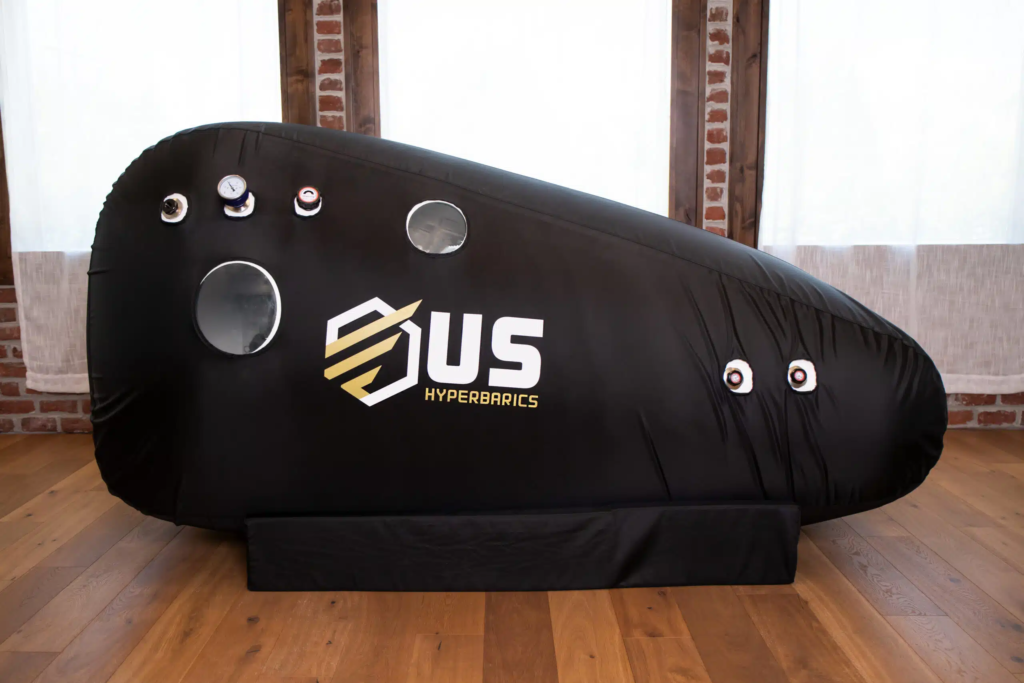
At Core iV Therapy®, this is one of the questions we hear most often about our 1.3 ATA mild hyperbaric chamber: can it actually help with concussion recovery? Here’s what the research says — and where it’s still an open question.
Why Concussion Recovery Can Stall
After a traumatic brain injury, some tissue survives the initial injury but continues functioning poorly. Researchers describe this as tissue that is alive but metabolically compromised — affected by inflammation, disrupted blood flow, altered metabolism and impaired oxygen utilization.
That combination can leave a person with real, measurable symptoms even when a standard CT or MRI doesn’t show obvious structural damage. It’s one reason concussion recovery can feel so unpredictable — the injury isn’t always where the imaging looks.
Where Hyperbaric Oxygen Fits In
Hyperbaric oxygen therapy increases the amount of oxygen available to the body by combining increased atmospheric pressure with increased inspired oxygen. Researchers have investigated whether repeated HBOT sessions can influence neuroplasticity — the brain’s capacity to reorganize and adapt — and, by extension, persistent post-concussion symptoms.
A 2022 systematic review evaluated 11 studies involving persistent post-concussion syndrome. Several trials using repeated HBOT reported improvements in symptoms or cognition. But the review is candid about its limits: results varied by pressure and oxygen dose, and controversy remains regarding the use of sham (placebo) exposures in some trial designs.
In plain terms: there is enough evidence to make this area scientifically interesting, but not enough to call the debate settled. That distinction matters most for athletes and anyone with a history of concussion who is weighing HBOT as part of a recovery plan.
Why Dose and Protocol Matter
One theme runs through nearly all of the encouraging concussion and TBI research: it’s rarely built on a single session. Many of the studies that reported meaningful improvement involved dozens of repeated exposures over weeks or months.
That’s part of why our mild hyperbaric chamber operates at approximately 1.3 ATA — a pressure chosen for comfort and repeatability rather than intensity alone. A protocol someone can actually complete, session after session, is more valuable than an aggressive exposure they only use once or twice.
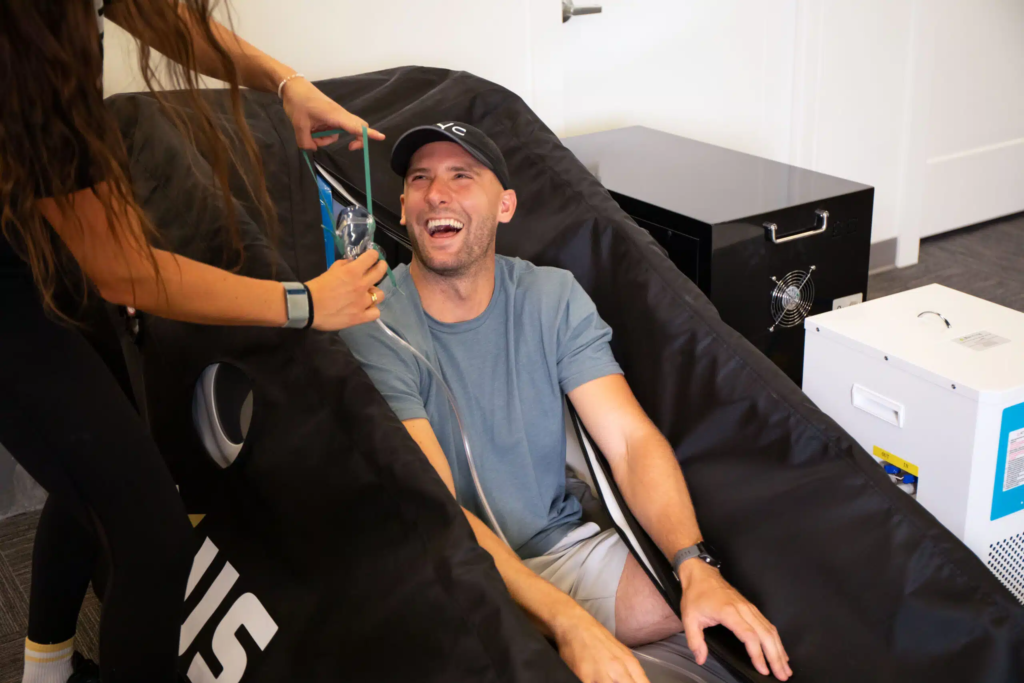
Our sessions also incorporate supplemental oxygen delivery by mask when appropriate, since pressure and oxygen concentration are two separate variables that work together to maximize oxygen exposure during a session.
This Is Not a Replacement for Emergency or Hospital Care
It’s worth repeating clearly: hospital-based HBOT, delivered at higher pressures (generally 2.0–3.0 ATA) in hard-sided chambers, is used for a specific set of established medical emergencies — decompression sickness, carbon monoxide poisoning and similar acute conditions. A concussion or TBI with any red-flag symptoms (worsening headache, repeated vomiting, loss of consciousness, confusion) needs medical evaluation first, not a wellness chamber.
Our 1.3 ATA protocol is designed for wellness, recovery and longevity support once someone is medically cleared — not as a substitute for emergency neurological care.
What This Looks Like at Core iV
For clients exploring HBOT for concussion or TBI-related symptoms, we generally emphasize:
- Meaningful session duration, typically around 60 minutes at therapeutic pressure
- Supplemental oxygen delivery by mask
- Repeated, individualized sessions rather than a single one-off visit
- Honest framing — this is supportive and investigational, not an established cure
Some clients also pair sessions with other recovery-focused therapies as part of a broader protocol, with hyperbaric oxygen typically used as the final step.
If you’d like the fuller picture of how we support concussion and TBI recovery — across our full range of complementary therapies, not just hyperbaric oxygen — visit our Concussion & TBI Support page.
Talk to Us About Your Recovery Goals
If you’re navigating concussion recovery or lingering post-TBI symptoms and wondering whether hyperbaric oxygen belongs in your plan, schedule a consultation with Core iV Therapy®. We’ll talk through your history, your goals and where a 1.3 ATA protocol may or may not make sense.
Core IV Therapy® is located at 108 Elden Street, Suite 15A, Herndon, VA 20170. Call 866-426-7348 or book online.
Quick Answers
Can hyperbaric oxygen therapy help with concussion symptoms?
Research is promising but not conclusive. A 2022 systematic review of 11 studies found several trials reported improvements in symptoms or cognition after repeated HBOT, though results varied and some controversy remains about study design.
How many HBOT sessions does concussion research typically involve?
Most of the encouraging studies involve repeated sessions over weeks or months rather than a single visit, which is why we treat HBOT as a cumulative protocol rather than a one-time treatment.
Is mild hyperbaric therapy safe after a concussion?
Anyone with a recent head injury should be medically evaluated first, especially with red-flag symptoms like worsening headache or confusion. Our 1.3 ATA protocol is intended as supportive wellness care once someone is medically cleared, not emergency treatment.
What pressure does Core iV Therapy use for TBI and concussion sessions?
Our mild hyperbaric chamber operates at approximately 1.3 ATA with supplemental oxygen delivery by mask, chosen for comfort and repeatability rather than maximum pressure.
Reference
Harch PG. 2022 – Persistent Post-Concussion Syndrome / Mild TBI
Systematic review and dosage analysis examining HBOT in persistent post-concussion syndrome.